Saturday, February 26, 2011

Mother Language Day


Last Monday, Bangladesh took the day off in honor of International Mother Language Day, a holiday that holds special meaning for Bangladeshis. I haven’t written very much about this but the people of this country are fiercely proud of their language (something I can understand thanks to the French in my blood I suppose). In 1952, when Bangladesh was still considered East Pakistan, Pakistan attempted to impose Urdu as the national language. This resulted in mass student protests where many students were killed. In Dhaka there is an enormous memorial dedicated to the memory of those who died to preserve Bangla. In Chittagong there is a memorial as well though it is much smaller.


(Lyny and Deepti, Cambodia/Nepal)

(Oanh, Giang, and Tien from Vietnam)

On the morning of the holiday we woke up early and gathered at AUW to march to the Chittagong memorial carrying a wreath of flowers and an overflowing amount of Bangladeshi pride. In a particularly moving show of unity, one of our students holding the wreath was actually from Pakistan. As we began the long walk, collecting stares along the way, I found myself smiling widely. Not only were we the bizarre sight of fifty grown women out on the streets together but our group also consisted of Nepalis, Vietnamese, Cambodians, Chinese, and Americans.

The crowd leading up to the language memorial was enormous and festive. Men sold Bangladesh flags, headbands, bracelets. Faces were painted. Bangla songs sung. Laughing, excited children were out in droves. I usually feel a little wary, at least in my own country, of such fervent displays of nationalism but these kinds of celebrations feel different in countries that are decades rather than centuries old. When Independence exists in living memory, commemoration is not just about the idea but what was experienced.


The next day at school there was a celebration of all of AUW’s languages. Students from each country performed poems or dances or songs in their own mother languages. I was not there but everyone who was, from teachers to students, spoke of the event with incredible emotion. Listening to their reactions, I could not help but think about how the old traditions and ways of those in a new world become acutely precious. Like when one of my Cambodian students said she never thought of herself as Buddhist until she arrived at AUW, until she was placed in sharp relief to the other Muslim, Hindu, and Christian students. Only then did she understand how she was different and who she was.


We work so hard to not have the individual countries band together, to encourage the students to search outside of what they know but there’s no way to fault the impulse to desire the familiar. Especially since we foreign teachers do exactly the same thing. My sense of Americanness and love of country is never more heightened than when I’m not in the U.S. The truth is I usually feel very little when I sing the Star Spangled Banner at baseball games but singing under the Southern sky in a tiny pinprick of a village in Rehoboth Namibia I had to fight back tears.


So much more to write about but I will spare you for now. Trip to Nepal coming up in March. An incredible number of exciting school projects going on. And of course the Cricket World Cup (yes, I understand cricket now). More stories soon...

* Many of these photos courtesy of Calynn Dowler

Wednesday, February 9, 2011

Lunar New Year and Saraswati Puja

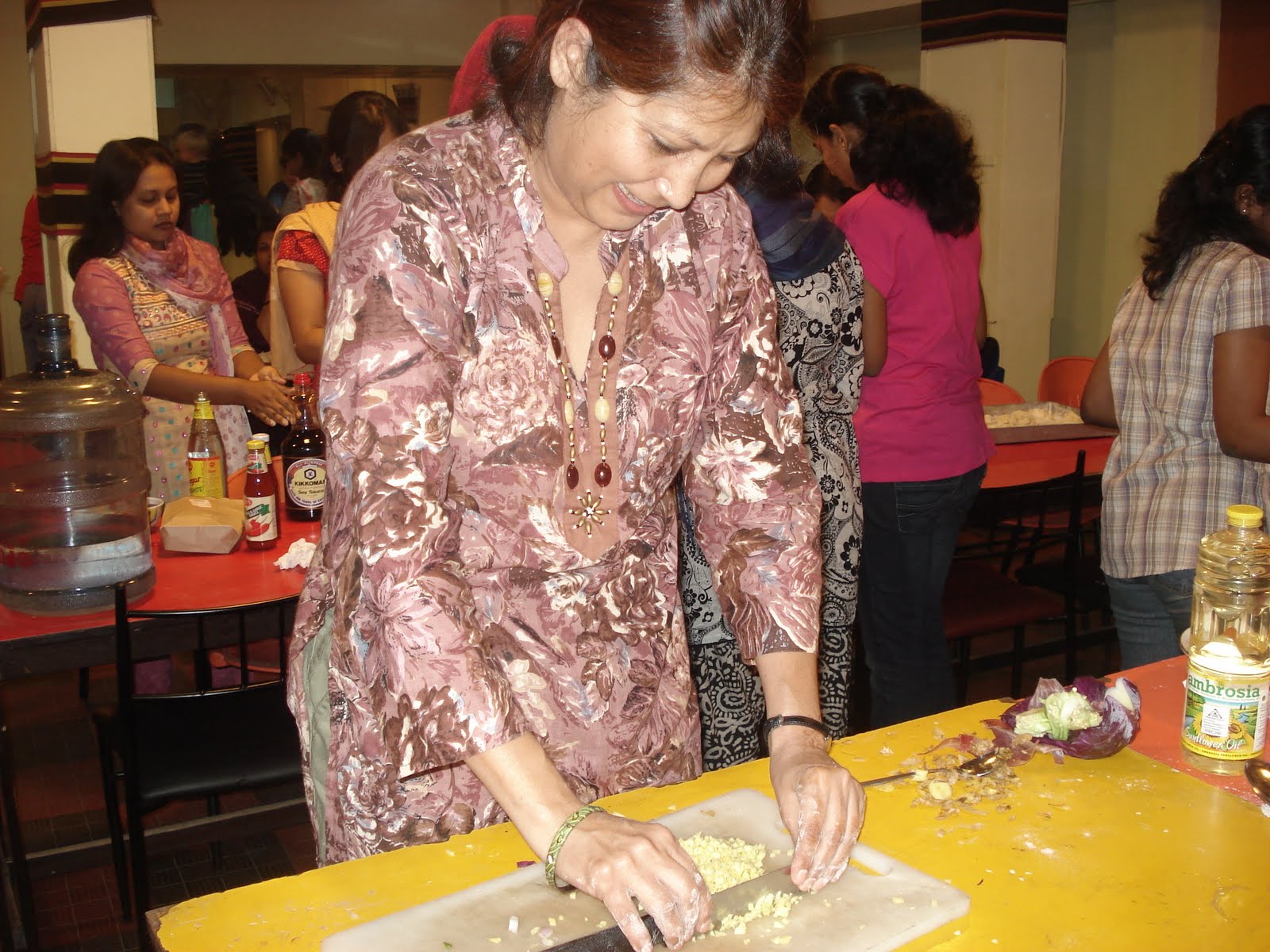
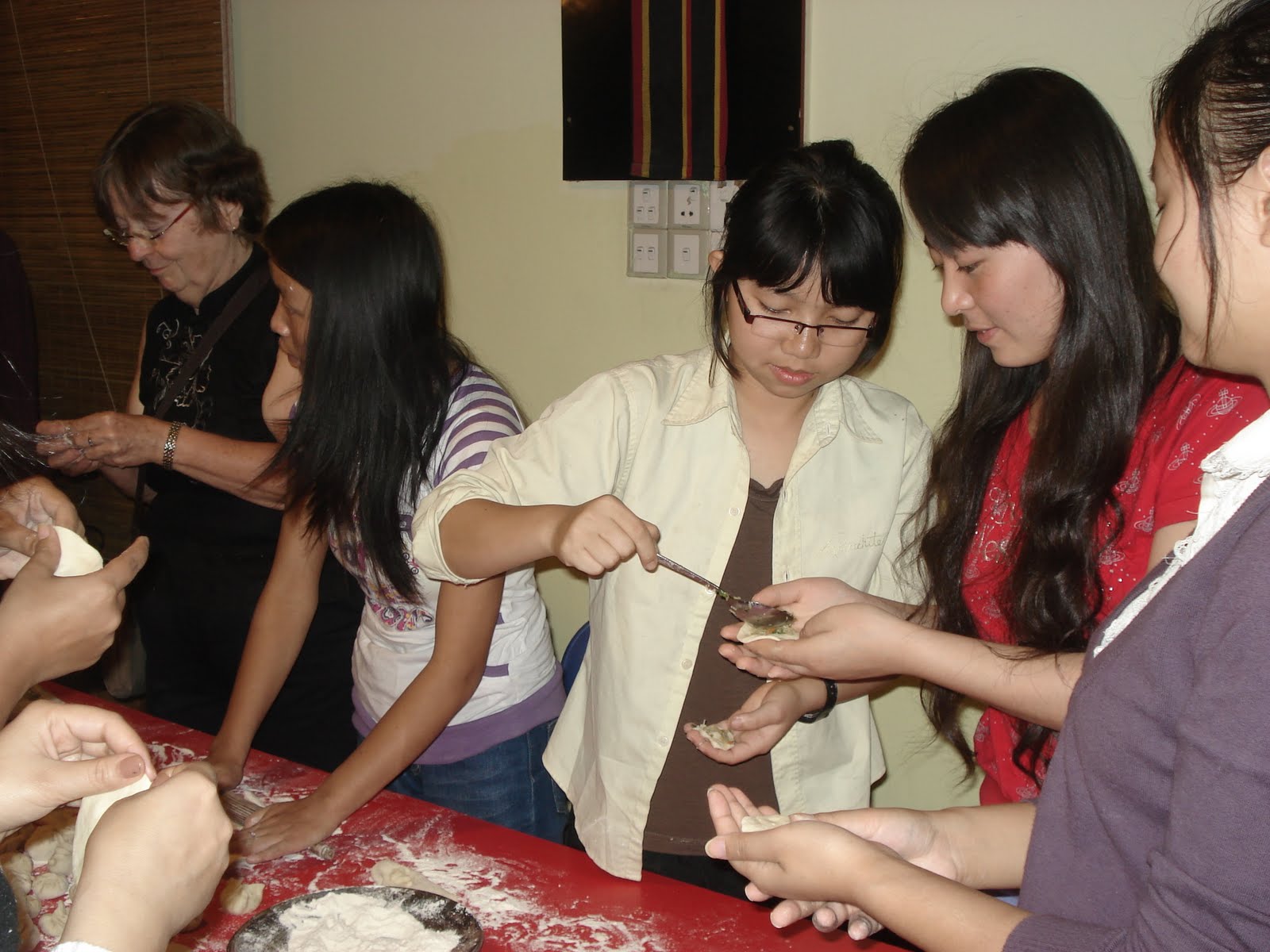
Chinese New Year Dumpling Feast...


(Professor Sangita chopping ginger!)


(making Chinese dumplings)


(more dumplings)


Saraswati Puja...


(Hindu priest with Saraswati statue behind him)


(Sri Lankan student, Ruwani)


(Hindu temple)

Saturday, February 5, 2011

Bird-Watching

On the mornings I wake up early enough, there's a large tree outside my window by which I can sit, drink tea, and yes, bird watch. Bird watching is not really a favorite past time of mine. But here, it’s such a rarity, that I find myself riveted whenever I see a bird that isn't a crow. In my tree their are those with bright green feathers and orange beaks that look as if they belong in the Amazon, smaller ones with jet black coloring offset by a streak of white or red, tiny brown puff balls with loud twittering voices, yellow ones, blue ones, an amazing menagerie. The crows are still there too-- darting in and out of the trees, picking on the smaller birds, and fighting amongst themselves. But for a few brief moments at the start of each day, they no longer seem to dominate the sky.

There are fourteen students in my new class (which focuses on reading comprehension and writing skills) and it’s a diverse group. Women from Cambodia, Sri Lanka, Pakistan and of course Bangladesh. In the last couple of weeks we read Letter from Birmingham Jail and an excerpt from Tim O'Brien's The Things They Carried. Listening to the girls debate the merits of passive resistance and compare the Civil Rights Movement to struggles in their own countries gave me goosebumps. Next week we're starting To Kill a Mockingbird and I can barely contain my inner literature nerd. This class has rapidly become my favorite part of each week.

And then there's Maya*, a Nepali student I had in my TA class last term. She's bright and extraordinarily thoughtful. She reminds me a lot of my former Namibian student, Jeneth. Both seem to have an overdeveloped sense of empathy, an innate kindness and instead of being suspicious about the constant onslaught of things that are new and different, they are open and curious.

Every Thursday afternoon Maya and I meet to discuss a book we're reading. But more often than not the conversation devolves into stories from her old life in Nepal, how she's been altered by school, how difficult it is to go back, and how wonderful but overwhelming her changing sense of the world is. She asked me whether I had ever felt shaken by all this new and contradicting knowledge. She asked me how I had figured it all out. Initially I laughed, but as I began to reply I had to work very hard to hide my sadness. I had seen that look she had on her face, that need for someone "older and wiser" to tell her that the years ahead will be easier, that the answers are forthcoming with age, that the uncertainty she feels will dissipate with the passing decades. I'm pretty sure
I looked at my teachers like that. I'm pretty sure I still do.

Education matters. Obviously I believe in its power and in the overall good that learning offers. But I've realized, at least here, it's just not that simple. Sometimes I marvel at what we've done, setting this course into motion for these girls. We tell them the world is theirs if they want it, if they study and try. The University broadens their lives, just like college did for most of us. The difference is none of us had to return home to the mountains of Afghanistan or a rural village in Bangladesh. None of us had to exist as a bright green bird amongst an army of crows. That takes a kind of sustained courage I'll never know.

In the evening the tree outside my window is empty so I watch the rooftop next door instead. Some nights I watch a young boy trying to wheel his bicycle around the small space, dodging bathers and those attending to the plants. He doesn’t really see the others. He’s in a wide green field. He’s racing along the banks of a river. He’s somewhere without containment because he can dream himself there.

Other nights I watch two little girls hang laundry. When they think no one is looking they toss a pebble into the air and hopscotch across imaginary squares. My window is cracked and I can hear their laughter, half uncertain of, half delighted in this secret joy.


*name changed

Saturday, January 29, 2011

January Whirlwind


I have hardly stopped moving since I returned to AUW from spending Christmas in the U.S. There was the usual bustle of a new semester and getting everything in line. We also had a weeklong conference with a very conference-esque name: Asian University for Women Symposium, Imagining Another Future for Asia: Ideas and Pathways for Change. The first part of the Symposium took place in Chittagong. 80 guests from around the world descended upon the University to visit classes, tour our new buildings, meet students. Students from a first year writing class read some of their original work for the guests, amazing us all with their words and poise.

Then it was Symposium Part II which involved putting 400 students and 75 faculty and staff on an 7 hour train to Dhaka. With so many of us, full train cars were devoted to AUW only and it felt a bit like we owned the place. As if we’d all clamored onto the Hogwarts Express heading for some magical destination. The girls sang songs and ate sweets. The energy was addictive. Even the faculty, extracted from their adult reserve, seemed more animated.

The Symposium was jam packed with panels and presentations. The first day the Bangladeshi Prime Minister Sheikh Hasina gave a speech which was followed later that night by dinner on the steps on the Bangladeshi Parliament Building. The Parlaiment Building was designed by Louis Khan shortly after Independence and is a sight to see.


Before dinner we were given a tour inside, which I understood from the AUW Bangladeshi staff to be a real honor and rarity. I’ve never been inside a building like that one. It looks grand (though somewhat imposing) on the outside and I had visions of the U.S. Capitol, plush and sleek, open and designed for onlookers. But I understood immediately just how rare visitors must be inside the massive halls which were stark and concrete, and felt as if we were moving in the bowels of a ship.

As we were leaving the building the guide took us up some steps to a concrete plateau that overlooked the lake (moat) that surrounds the building. The view was striking with the enormous circular Parliament in the distance and the bright orange moon in the sky.

The most exciting presentation at the Symposium was by Hans Rosling, a Swedish Public Health professor and TED talker extraordinaire, who brought the audience to its feet with his fascinating explanation of how and why countries have developed over the last hundred years. He’s one of the most engaging speakers I’ve seen in a long time.

The most touching presentation was by our own students, a group of Sri Lankan women who presented a project they worked on last summer to foster reconciliation between Tamils and Sinhalese in the wake of a decades long civil war. They traveled to Sri Lanka, working with youth and communities on both sides conducting research, organizing a cricket match and perhaps most movingly cleaning up a cemetery of the war's fallen together. What these students (both Tamil and Sinhala) were able to achieve, especially between themselves, reminded me that while the diversity we have at AUW is complicated and messy and the progress between groups stutters along at an unpredictable pace, exposure to those different that yourself is a powerful life-changing force.

By the time the Symposium was over all 400 of us were exhausted and dare I say ready to return to Chittagong. Dhaka did not let go of us easily however. We spent a good five hours in the train station, not able to leave until 3am. We were lucky enough to huddle inside our bus but the poor students were stuck out on the platform. Showers and beds were everyone’s priority the next morning when we finally arrived.


(Afghan students)


(Nepali students)

I’m teaching a class this semester (more on that soon) and am currently immersed in preparation and the excitement of sharing some of my favorite books with new eyes. Hope you’re all doing well.

Thursday, December 16, 2010

You Know You've Been in Bangladesh Six Months IF...


As the term comes to an end, I realize that I have both settled into my life here and am longing for a break at home. For the first time I am seeing the end of a college semester from a teacher's point of view and understand that it's just as time-consuming and stressful no matter what side of the fence you're on (my friends in grad school may still beg to differ). I'm running into my sixth month in-country and was thinking the other day how different Chittagong seems than when I first arrived. My ride from the airport was a chaotic jumbled mess, but now I can pick apart the pieces of this city and there is a growing familiarity with all the unknown that makes me feel a bit less foreign in my surroundings.

So in honor of the term's end and in tribute to a country that has welcomed me, I thought I'd write about the signs that let you know Bangladesh is no longer that strange country with a weird name but a kind of second home at a University that is quickly becoming the most incredible place I have ever worked.

Without further adieu, you know you've been in Bangladesh six months if...

You have ever feared for your life in a rickshaw.

I named my blog before I arrived in Bangladesh but as luck would have it I could not have chosen a more appropriate name. Rickshaws are everywhere. I was nervous of taking rickshaws at first and also uncomfortable with the idea of a tiny man made of bones and little else pedaling me a distance I could otherwise walk. But I've grown more accustomed to the rides now and even enjoy sitting inside a brightly colored flimsy basket, wind whooshing through my hair, the slight nagging feeling that I'm about to be run over by a giant bus. But there's a closeness to your surroundings and the road feels more real in a rickshaw than a van or a CNG.

(scariest rickshaw ride ever, as you can tell from my face)

The rickshaw drivers, known here as rickshawallas, generally do not own their rickshaws but instead rent them for a daily fee. The cost of a rickshaw ride is unbearably low though it does vary based on distance. Most of what they make during the day goes toward the rental fee with little left to support themselves or their families. In the States college kids pull tourists around in rickshaws with the air of the ridiculous. Here the men carrying other men often seem hollow and sad, all of their energy poured into getting strangers from one place to another while they go nowhere.

You have gained ten pounds from eating too much mishti (and curry, naan, pratha, rice, ghee...)

While my stomach situation has been less than ideal these past months, I have eaten some incredible food here. I could dedicate a book to the bread alone. But it is impossible to talk about Bangladeshis and not mention their sweet tooth. They use sweetened condensed milk in their tea. Sweet shops are everywhere with rows and rows of syrupy, sugary treats (known as mishti). The last few weeks we've been too busy but for awhile, we had a ritual every Thursday night (your Friday) to stop into one of our favorite shops, Fukoli, and each buy a box. An exciting weekend night included us huddling over our flour, butter, and confection with a pirated bollywood movie and thai diet coke. You are now aware of the extent of my social life. Despite it's limitations, I looked forward to laughter and sugar every week.

You have had to get up at 5am to go to work because of a hartal.

So it seems the Bangladeshis like strikes just as much as the French. We've had two this year so far-- political strikes called hartals, announced for various partisan reasons too silly to bore you with, by one of the major parties in the country. Everything is shut down. Businesses don't open and schools are closed from 6am-6pm. Supporters roam the streets to ensure everyone is complying. The first time, AUW was called off. The second time, determined not be interrupted by the nonsense again, the University bussed us in at 5:30, all of staring at each other blurried eyed in the early morning van, not quite sure this was actually happening.

You have a pet goat named Mutton Chop.

Down the street from our apartment building is a small set of corner shops where you can get pretty much anything under the sun (including a Thanksgiving turkey but that's another story). Our favorite of these shops is called Ms. Moonshine. It's tiny but is literally covered floor to ceiling with stuff: peanut butter, dish washing soap, brooms, mops, diet coke, bread, butter, chocolate digestives, corn flakes. The people who work there are really nice, have never tried to overcharge us, and the shop is often better stocked than the grocery store nearby. Next to Moonshine is a small hole in the wall restaurant that looks like a shack. Passing by the open windows there's always a man rolling out dough and popping naan into the oven. There's also a goat that is often tied outside the restaurant nibbling a stem of green leaves or the bits of grass. After passing this goat for several weeks and making a fuss over it the restuarant owners began to point her out to us encouragingly each time we walked by. Once the owner, a jolly man with a round belly, pointed her and said "mutton" with a grin on his face to which we all groaned noooo.

None of us wanted to get too attached to dear sweet Mutton Chop because Eid was fast approaching and we figured she was a goner for sure. So we said our goodbyes to her before heading up to Dhaka figuring it was the last time we'd see her. However when we returned to our utter joy as well as confusion we found she was still alive. Calynn pointed to Mutton Chop and said simply "Eid?" The owner laughed and made a motion over his stomach indicating that our goat was soon to be a mother. It's forbidden to kill any pregnant animal at Eid. And so Mutton Chop lives! And we have babies on the way.

You are a little in love with all of your students.

Just a few hours ago, I came home from the kick-off of our big sister mentorship program (undergraduates paired with Access Acaemy) and dance party. It was similar to the welcome party I wrote about at the beginning of the year, but seeing how much the girls had grown in confidence and English ability left me speechless. The Afghan girls, who are generally never seen without head scarves, danced merrily along with the others. Their hair coverings occasionally slipped down around shoulders revealing youthful pony tails and braids beneath. I chatted with many of the students I have been lucky to know the past five months, wondering how much progress they will have made by the end of the year. For a brief moment I felt a tug of sadness inside to be leaving, even for just three weeks.

Heading home for Christmas tomorrow. So looking forward to being home with my family and in a country with redlights. See you all soon.

Friday, November 26, 2010

Dhaka Pictures


(power lines)


(Language Memorial)


(Bangladesh Supreme Court Building)

(Dhaka University)

Dhaka

Last week we had a five-day break for Eid al-Adha, the second Eid, which commemorates the story of Abraham’s near sacrifice of his son Ishmael (not Isaac as in Christianity). I went to Dhaka for the first time since my arrival at the airport five months ago. Before arriving we had to survive an absolutely terrifying seven-hour night bus trip on the Dhaka-Chittagong “Highway of Death.” I can safely say I didn’t sleep a wink on this swerving nightmare of a ride. It seemed like we were on an enormous rocking boat going an hundred miles an hour, making our way on a tiny fog ridden road, crushing everything in our way. But we made it and from now on I’ll be taking the train.

Dhaka was empty. A mass exodus to villages had hollowed out the City. All across Bangladesh people returned to the rural areas where they’d been born and where cows and goats awaited a very bloody fate. The ritual that belongs to Eid al-Adha is that of Qurbani, or the slaughtering of an animal as a sacrifice to God. In the days leading up to the festival you see cows decorated with necklaces of flowers or bright cloth encircling their horns—a fleeting moment of beauty and respect just before death. They lumber along, seemingly calm and unaware of what lies ahead.

It will sound strange to anyone who hasn’t been living in Chittagong since this summer when I say that Dhaka reminded me of home. Obviously it’s not like home at all. But there were many many more foreigners, women riding bicycles, cafes, red lights (though we were informed by a Bengali that they’re “optional”), parks, fewer stares, couples holding hands in gardens, and the general feel of a capital city—more cosmopolitan, progressive, and ahead of the rest of the country. While new visitors to Dhaka might see pushy rickshaw drivers, men praying in the streets, I seemed to only be able to concentrate on the familiar.

We visited the American Club, which was even more bizarre. It was like being dropped into an alternate reality. Blonde boys and girls played on a swing set next to a tennis court. Women in bathing suits read magazines by a giant in ground swimming pool. There was bacon and Starbucks and fifteen different types of beer in this strange, cocooned world. I realized it would be entirely possible to be in Bangladesh and never really know it if you existed within the walls of the American Club. But I also couldn’t be as dismissive and snide about its comforts and self-imposed segregation from the “natives” as I might have been if I was hearing about it from the U.S. When you miss home for a long enough and are gawked at any time you step outside your door, the respite that comes with pizza, sameness, and reminders of your old life is both wonderful and necessary.

There was still plenty of Bangladesh in our trip to Dhaka to keep us from completely forgetting where we were. The morning all the animals were slaughtered we were inside but leaving the house later we could not escape the aftermath. It was a vegetarian’s nightmare (and I was traveling with two of them). Bodies, and when I say bodies I mean entire bodies, of goats and cows lay sprawled out in front of houses. We were staying in the wealthier part of Dhaka called Gulshan so it seemed every house on our street could afford a cow. I saw stomachs, rib cages, bowels, legs, piles of hooves and hides. Men pounded on bones and slabs of meat with enormous knives. Blood streaked down the long white Punjabis men wore. Women squatted in saris, cleaning out the intestines. The smell of the blood and meat was thick and distinct but did not seem to deter men and women from sipping tea right next to those who were chopping at flesh. We were told it would take 4-5 hours with everyone working to completely take apart the cow and have suitable meat for cooking.

On the banks across the houses sat groups of thin, ragged men, women, and children holding bags in their hands, waiting. Eid al-Adha is not just about sacrificing an animal to God. What happens after the sacrifice matters too. A third of the meat is kept by the owner of the cow. A third is given to friends and family. And a third is handed out to poor waiting strangers who have never and will never own a cow. The open-handed generosity brought out images both oddly beautiful (men and women practically skipped with overflowing bags of meat on their heads and in their hands) and uncomfortable (lines of people arguing with one another about who would get what). But mostly the holiday left me with a sense of unsparing balance. The animals that died at the hands of those who would eat them gave life and precious meals to the people I often see digging for scraps in the mounds of trash outside of my well-furnished apartment. I think few of us imagine that there’s dignity in a hamburger but watch men live off garbage and food becomes a currency with multiple values.

And speaking of feasts, whether you axed your own turkey or not, I hope you all had a wonderful Thanksgiving. Shockingly, Chittagong’s fanciest hotel had a Thanksgiving buffet last night and we ate our fill. It wasn’t as good as my grandmother's, but they even had cornbread.